New JCVI guidance on Qdenga dengue vaccine
APR 15, 2024
.png "New JCVI guidance on Qdenga dengue vaccine")
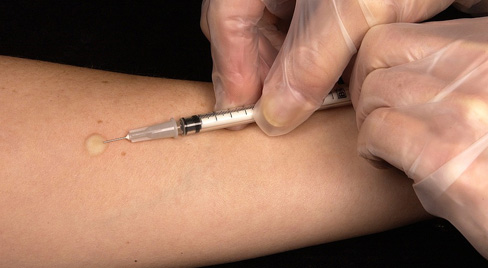
On 21st March 2024, the UK's Joint Committee on Vaccination and Immunisation (JCVI), finally published its provisional guidance on the new Qdenga (TAK-003) dengue vaccine, which has been approved since 2022 by the WHO for use in countries where there is high risk of dengue infection without the need for prior blood testing to determine whether the patient had previously had dengue infection before (which had been the case with the first dengue vaccine, Dengvaxia).
Qdenga has been licensed for over a year in Brazil, Argentina, Thailand, Indonesia, the EU and the UK. It has been offered to patients without restriction in our clinic since August 2023 and in our experience is generally well tolerated.
The JCVI's new precautionary guidance has naturally caused some anxiety among travellers as well as extra work for travel medicine practitioners, trying to explain the JCVI's reasoning.
What concerns the JCVI is that during the time when Qdenga was going through its final Phase III trials (since 2016), there has been insufficient naturally occurring DENV-3 or DENV-4 virus in circulation within the study populations to be able to determine for certain whether the new vaccine would be fully safe, following subsequent exposure to these two serotypes. There is thus still simply a theoretical risk that patients might possibly develop a similar antibody-dependent enhancement (ADE) reaction to a second natural infection, i.e. and then possibly develop severe dengue on a subsequent exposure to DENV-3 or -4 several months or years down the line.
→ JCVI argue that in low-risk (short-term) traveller patients, the risk vs. benefit equation for receiving the new vaccine is as yet unknown (due to 'insufficient data'), which is why they cannot recommend its use for all at-risk travellers.
→ However, for experienced travellers, migrants and expats who have travelled extensively, lived or worked in dengue-endemic regions, or who intend to spend a significant time in such places in the next few years, the JCVI do accept that such patients may well, on balance, benefit from Qdenga, following risk assessment/discussion with a travel medicine specialist…
…In such cases, we are then weighing the known, real risks of dengue infection and disease vs. an entirely theoretical one, since in the past 5 years since the Phase III trial started there has so far been no evidence of harm from an ADE-related reaction reported anywhere in the world (despite active follow-up looking specifically for this).
→ For example, among unvaccinated travellers to Thailand, there is currently a 1% risk of symptomatic dengue infection per traveller month, which means another 3% probably infected per month without knowing it. Each person out of the total 4% infected would still have a further lifetime 2-4% risk of developing severe dengue if infected a second time... However, this risk of severe dengue and/or hospitalisation would already have been significantly reduced if the traveller had been vaccinated with Qdenga (70% and 84% respectively).
Dengue is unquestionably one of the most common infectious disease risks for international travellers, particularly those to South and SE Asia, from where 71% of cases are reported. There have also been large epidemics in Brazil, Argentina and the Caribbean in recent months, due to climate change-related droughts and heatwaves in those regions. The risk in Africa is often underestimated, but is particularly high in hotter, coastal areas of West and East Africa, with a current epidemic in Burkina Faso.
…On the other hand, primary dengue fever and even 'severe dengue' are rarely fatal, especially with careful inpatient management of fluids in hospital in the case of the latter. And it is a relatively expensive vaccine in this country.
These are all valid arguments, but it is naturally somewhat confusing for some people not used to weighing up relative health risks. We at TrExMed are therefore happy to assist travellers trying to make sense of the conflicting advice and national guidance (e.g. EU vs. UK) following this JCVI decision.
Here are a few pointers to help you decide:
→ If you have had lab-confirmed dengue infection before, you should certainly consider having Qdenga if travelling to prevent severe dengue arising following a second, (third or fourth) infection.
→ If you have already started a course of Qdenga, undoubtedly the best advice would be to complete the course. (You have already effectively been infected with a dose of attenuated DENV-2 virus, so can only benefit from achieving a more balanced protection against all four serotype antigens going forward).
→ For other, experienced travellers (i.e. unknown serostatus), your options are:
- Wait 5 years for more safety data to emerge and rely on insect repellents etc. to prevent dengue and other mosquito-borne infections
- Have a dengue blood test first (£70) to determine whether you have previously been infected before proceeding, or:
- Make an informed decision regarding the balance between known real risks from natural infection (taking into account your previous travels and future plans) vs. the theoretical risk from the vaccine
→ For first-time travellers to dengue endemic areas, we would suggest that you consider other (arguably more important) travel vaccinations first, e.g. rabies, Japanese Encephalitis. The data on dengue vaccines shall only increase, as shall the range of vaccines available, each with their own strengths and limitations.
If you would like to discuss your individual circumstances/risks further, do please feel free to make an appointment with no obligation to proceed to the vaccination should you decide not to.
© Jim Bond, April 2024