Rabies
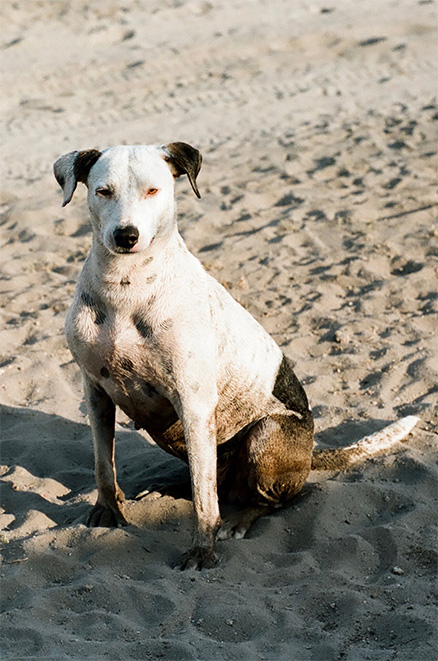
Rabies is a life-threatening, viral infection, which specifically targets and enters peripheral nerve endings and from there travels up the nerves to the brain. It can be carried by a variety of mammals, including dogs, cats, bats, mongooses, jackals, racoons, foxes, civets, monkeys, coatis and Cape fur seals. Worldwide, the greatest risk to humans is from domestic dogs and cats (whether owned or stray/feral), although bats also pose a relatively significant risk in the Americas.
Rabies is nearly always transmitted to humans through contact with the saliva of an infected mammal, through bites, licking of broken skin or scratches. Inhalational exposure via aerosolised secretions is also a (rare) cause of transmission to humans in poorly ventilated caves where millions of bats roost.
Rabies is especially common in parts of Africa, South and SE Asia, causing 59,000 human deaths each year and untold fear and suffering among local people.
Overall, the risk to travellers of rabies itself is very small, but the consequences potentially major. Without pre- or post-exposure vaccination, rabies is almost always fatal. It has the highest case fatality rate of any infectious disease (effectively 100%).
By contrast, the risk of a potentially rabid bite (i.e. one you need to do something urgently about) when travelling in an endemic country is relatively common. Worldwide, for unvaccinated travellers, it is now:
- Two-thirds the risk of symptomatic dengue in hotter parts of the world
- 4x the risk of yellow fever in West Africa (during an urban outbreak) and 40x the risk in endemic parts of S. America
- 64x the risk of hepatitis A in Africa, 150x the risk in Asia and 400x the risk in Latin America
- 20x the risk of typhoid in South Asia & Samoa, 200x the risk in Africa, South America and the Middle East, and 400x the risk in SE Asia.
- 200x the risk of hepatitis B in Asia
- 8000x the risk of tick-borne encephalitis in endemic areas
- >100,000x the risk of tetanus, diphtheria, polio or cholera (source: Robert Steffen et al., J. Travel Med, 2023)
Prevention
- Pre-exposure rabies vaccination is recommended by the World Health Organization (WHO) to be considered for all travellers to regions where rabies is moderately or highly endemic (i.e. 116 countries).
- Unnecessary contact with dogs, cats and other animals (including temple or beach monkeys) should be avoided. Most dogs (>70%) look and behave quite normally when infectious with rabies, but can still bite by reflex to sudden movement.
- Any bat bite or scratch is considered a significant contact, as bat-specific lyssaviruses (more common outside the Americas) have evolved to transmit via more superficial contact than classical Rabies Virus (RABV). Vampire bats may also feed from veins on the feet of sleeping people, so a mosquito net is thus a doubly sensible precaution at night in the Amazon.
Rabies vaccination
Currently available active rabies vaccinations should only be given by either the intra-dermal (ID) or intra-muscular (IM) routes in humans.
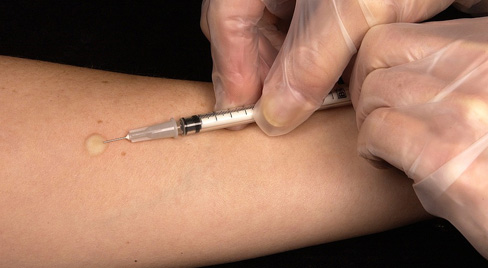
Both are very effective, but the ID route is cheaper, less painful and has fewer systemic side effects. Since it is taken up directly by the dendritic (antigen presenting) cells in the skin and then transported to the lymph nodes in the armpits, ID is more immunogenic than IM so requires a smaller overall dose to generate a satisfactory immune response. ID has also been shown to provide a better T-cell immune response within the first 14 days so is particularly good for last minute travellers.
The WHO now considers ID to be the preferred vaccination route 'where the expertise at administering it is available'. Both travel health practitioners at TrExMed have over 27 years' experience apiece of giving ID rabies vaccination.
Since 2018, we have offered two pre-exposure vaccination schedules:
1. WHO-recommended intra-dermal schedule: 2 clinic visits, at least 7 days apart, with two ID injections each time. As of May 2025, one brand of rabies vaccine is now (finally!) licensed by the MHRA in the UK for both pre- and post-exposure vaccination via the ID route, although it has been prescribed and administered 'off-label' via this route by experts in Edinburgh since 1984...
2. 'Traditional' intra-muscular schedule, still recommended by some other European countries: 3 clinic visits, with a single IM* injection each time, typically at 0, 7 and 21-28 days.
- [*The IM option is now usually reserved for a very small minority of patients with a medical contraindication to ID or who need to show proof of IM vaccination, e.g. to work as a vet in the USA. (- US residents: please also see update and link at foot of this page).]
→ The whole point of pre-exposure rabies vaccination is to protect you. It does not: "Merely buy you time"!
Evidence-based, international guidelines are that no further booster doses are required for immunocompetent travellers following a full intra-dermal or intra-muscular course, except in the event of a significant exposure (see what to do in grey box below).
The latest UK definition (UK HSA, Sept 2021) of a 'fully vaccinated person' is someone who has had at least three doses of rabies vaccination (IM or ID) on at least two different days, so the new WHO-recommended schedule of two double-doses ID on two visits at least 7 days apart also fits with that.
'Last minute' travellers:
Even if you do not have enough time for two clinic visits before you leave, the WHO now recommends that it is still better to give a first dose(s) of rabies vaccination (IM or ID) at a single visit before travel, followed by a further dose/double dose on return. The evidence is that even a single visit vaccination is rapidly and effectively boostable in the event of a bite from 7 days later until at least two years.
Post-Exposure Treatment (PET) - what to do if you are bitten, licked, scratched or spat in the eyes/mouth by a suspect mammal:
- Wash the wound out immediately, with plenty of soap and water for around 15 minutes (or any other readily available fluid) to remove any saliva. For eyes, just use water or contact lens solution.
- If available, follow this up with isopropyl alcohol (IPA) or povidone iodine (Betadine®) solution to help disinfect the wound.
- You should also seek medical attention locally as soon as possible for assessment by a health care professional and to have the wound properly disinfected ± antibiotics and a tetanus booster if necessary...
>> If you HAVE had a full, pre-exposure vaccination course previously:
You may also be advised by the health professional who assesses you locally to have a post-exposure booster (if the animal is not known to be vaccinated and the exposure considered significant). This would mean either four ID vaccinations on the same day only (recommended by the WHO and the most effective), or two IM (or ID) ones, 3 days apart. While the immunity generated by a completed pre-exposure vaccination course is now considered to be life-long, it still makes sense to temporarily flood the tissues with extra neutralising antibodies in the event of a potentially infected bite, to be on the safe side.
→ No-one who has had a full pre-exposure course and a booster in the event of an exposure has ever gone on to develop rabies. No other vaccine can compare with this 100% record.
>> If you HAVE NOT had a full, pre-exposure vaccination course:
You may need to have BOTH:
- Rabies immunoglobulin (RIG)* - or Rabies monoclonal antibodies (especially in India) - injected around the wound as soon as possible,
PLUS:
- Four standard IM rabies vaccinations on days 0, 3, 7 and 14-28 after first dose of RIG, or three double doses of ID vaccine on days 0, 3 and 7.
*Please note: RIG is often in short supply in rabies-endemic countries, and where available, usually only in a major or capital city.
- Between 1980-2022 at least 122 people (all previously unvaccinated) went on to develop breakthrough rabies and die, despite receiving post-exposure treatment (PET). 54 (44%) of these had received the full recommended gamut of thorough wound cleaning, immunoglobulin infiltration and post-exposure vaccinations; 94 (77%) had sought medical attention within 48 hours (Lancet Inf. Dis., Dec 2022).
The surfaces of the human face, lips and fingers are particularly densely innervated, so the chances of rabies virus finding a nerve ending before you can intercept and neutralise it with locally injected immunoglobulin or monoclonal antibodies (i.e. if relying on the PET-only approach) is especially high following a wound to these areas.
Arranging further post-exposure treatment (PET) vaccine doses on your return
If you have been already started on a course of PET vaccinations (ID or IM) following a significant potential exposure abroad, you can either contact the NHS Rabies PET service and be seen at the Regional Infectious Diseases Unit, Edinburgh (or paediatric equivalent for children) - or we can help you complete the course ourselves...
The main benefits of attending the NHS Rabies PET service are that: i) there would be no charge, and: ii) they can give RIG, if clinically still indicated. (We do not stock RIG).
On the other hand, the NHS service does not offer intra-dermal rabies vaccination for PET, so if you would prefer to continue your PET via this route (less painful, at least as effective and requires one fewer visit), or you simply can’t get through to the NHS service, please contact us and we shall do our best to fit you in.
Expeditions and other 'extremely remote' travel:
Rabies pre-exposure vaccination is the only vaccine which can be required by an expedition leader, medic, school or other organisation as a pre-requisite to being allowed to take part in an expedition to a high risk region. This is on ethical grounds, because by Sod's law, it is typically the one who has chosen not to get it who gets bitten, so potentially putting the whole expedition on hold or the other team members at increased risk, while that individual is medically evacuated to a major centre for RIG.
Given intra-dermally via the new WHO regime, it can also work out more cost-effective to arrange this as a group, particularly for local team members in country, who should of course also be protected to the same standard as foreign team members.
For travellers planning to be in extremely remote areas (i.e. more than 48 hours away from a hospital) additional, special arrangements may be advisable, e.g. carrying a dose or two of post-exposure rabies vaccine with you, or having a precautionary booster just before you travel (especially if exploring bat caves or handling feral/wild animals). If you feel you might fall into this category, please speak to Jim or Nicky to arrange training, supplies etc.
Rabies immunity testing
There are some people who have a high occupational risk of unnoticed rabies exposure, e.g. tropical cave explorers, laboratory workers working with the virus, or people handling wild or stray animals for mass vaccination or neutering purposes.
For such people, TrExMed offers a rabies immunity testing service. This consists of a blood test to see if you have significant levels of rabies virus neutralising antibody (RVNA) in your blood. For most healthy travellers the WHO no longer recommends routine rabies immunity testing following a full primary course.
However, for US-based travellers/veterinary surgeons, one option under the new ACIP recommended pre-exposure schedule is to have their RVNA titres checked within 3 years of their primary course of two IM vaccinations, instead of a 3rd dose.
© Jim Bond, updated Sept 2026