Yellow Fever
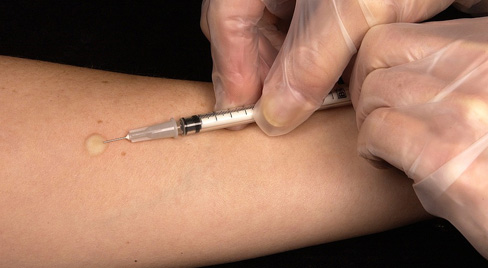
Yellow Fever vaccine is just one of the travel vaccinations we offer at TrExMed Travel Clinic, Edinburgh. Yellow Fever vaccine can only be administered by a registered Yellow Fever Vaccination Centre.
Yellow Fever is a potentially very serious viral infection, which can be transmitted to and from humans in some parts of the world by day-biting mosquitoes, typically Aedes (Stegomyia) species.
The natural reservoir of infection is in monkeys and other primates (including humans) in Africa and South America. Monkey-to-human transmission (via mosquitoes) leads to sporadic cases of Yellow Fever in people living in or visiting forested areas. This is sometimes known as: sylvatic' or 'jungle' Yellow Fever and was, until recently, the most common route of transmission in South America.
Infected people, leaving the bush to more populated areas can then also cause onward human-human transmission (again via mosquitoes) and more widespread, cyclical outbreaks from time to time - so called: 'urban Yellow Fever'. This is now the more common mode of transmission in Africa.
From 2016-18, there was a relatively large, urban epidemic of Yellow Fever in South America, with spread to monkeys and humans in some parts of South America not previously affected. Following this outbreak, the Brazilian Government introduced 'universal' YF vaccination, with an uptake so far of 73% (WHO, 2024).
However, despite this, Yellow Fever is once again on the rise in South America, with 296 cases reported in 2025, including 112 deaths (41%), across six countries: Brazil (119), Colombia (113), Peru (46), Ecuador (11), Bolivia (6) and Guyana (1). Much of this (sylvatic) transmission occurred in 3 localised areas: Tolima Dept., Colombia (103), São Paulo State (60) and Pará State (46), Brazil. Prior to 2025, Tolima had not reported any cases for over a century, and was not on the WHO or UK YF risk maps. For the latest human outbreak data for countries in South America, please check the PAHO page here.
There have also been a number of (mainly urban) outbreaks in Central Africa (Angola, DRC, Congo and Uganda) in recent years. The maps and categories of 'at-risk areas' for Yellow Fever transmission have been adjusted to take into account the shifting epidemiology. It is always best to check for any recent reports of outbreaks prior to departure to get the most up-to-date information. The last WHO update for Africa on YF was in March 2024, but based on those data, it would appear that unusually, the greater risk of transmission (both to local people and to travellers) is currently in South America, perhaps in part due to the large number of Stegomyia (ex-Aedes) mosquitos there, associated with the 2023-24 El Niño.
How serious Is Yellow Fever?
55% of infections go unnoticed, while in the remainder some or all of the following may present: a sudden-onset high fever, headache, back and muscle ache, nausea and vomiting.
In 15% of these symptomatic cases, often after appearing to get better, the fever can return with a second, more serious phase with liver failure and jaundice (hence 'Yellow'), abdominal pain and haemorrhagic symptoms such as bleeding from eyes, nose, bladder and gut. 20-50% of these cases die within 10-14 days.
Although the risk of being infected is said to be 5x greater in Africa, for some reason the case fatality rate among those that get the disease (i.e. develop symptoms) now appears to be almost twice as high in South America.
However, the risk of harm from the disease needs to be carefully balanced against the risk of side effects from the vaccine (see below).
Prevention
- There is a very effective vaccine available, providing long-term protection. This is given both a) to prevent the international spread of disease by protecting countries from travellers who may be carrying the virus, and b) to protect the individual traveller who may be exposed to infection.
- Avoid getting bitten! Use Insect repellents such as Mosiguard Natural® or DEET on exposed skin and cover up in at-risk areas. Even if you are protected against Yellow Fever by the vaccination, you may still be at risk from dengue, chikungunya (both spread by the same mosquitoes) and other diseases borne by biting beasties, for which there are no vaccinations available yet.
- Travelling at altitude, e.g. itineraries all above 2,000 metres in Ethiopia, is relatively safe as few mosquito species can survive at that height.
Mandatory Yellow Fever vaccination
For some regions, a valid 'international certificate of vaccination or prophylaxis' (ICVP) - or an exemption certificate - is required by immigration control to enter the country. The vaccination certificate only becomes valid ten days after receiving the vaccine, but is now recognised worldwide to be valid for life.
For details of which countries require a certificate, please visit: https://travelhealthpro.org.uk/
Please note that just because a country does not require a certificate to enter the country, this does not mean that there is no risk of infection in that country!
Yellow Fever vaccination: is it safe?
- No vaccination is 100% free of side-effects.
- Common side effects include a viral or flu-like feeling, 5-10 days after the vaccination, as YF is a live vaccine.
- Very rarely, encephalitis (YF vaccine-associated neurotropic disease) or severe hepatitis (YF vaccine-associated viscerotropic disease) may occur, which can be fatal, particularly in the latter. The risks of these, much more serious side-effects are higher in elderly travellers who have not had the vaccine before. The risk of YEL-AND is 8 per million, rising to 22 per million if given for the first time over 60 years old. The risk of YEL-AVD is 3 per million under the age of 60, rising to 10 per million between 60-70 years old and 23 per million over 70.
Contraindications
- Contraindications include: age, pregnancy, immunodeficiency from medication or disease, severe egg allergy and previous hypersensitivity reaction to the Yellow Fever vaccine.
- Yellow Fever vaccine is not recommended for children under 9 months of age, (but may, depending on risk, be prescribed as early as six months of age if need be.)
- The risks of serious side-effects, including death, are relatively greater in the elderly (see above).
If, after careful assessment, the risks to health are considered to outweigh the benefits, an exemption certificate for Immigration purposes may be issued by a registered Yellow Fever Vaccination Centre, such as the TrExMed Travel Clinic.
Yellow Fever Consultation
Some travellers are surprised to hear that they still need a 'single item appointment' before receiving a Yellow Fever vaccination, even if they have been told they need to have it by their own GP. This is because, as responsible practitioners, we have to assess:
- What your actual risks are of acquiring Yellow Fever infection on your particular itinerary (i.e. do you really need it, to protect your health?)
- Is it safe to give you the vaccination, considering your past/current medical history and age (i.e. would the risks of serious side effects from the vaccination actually outweigh any potential benefit?)
- Would another plan be more appropriate - e.g. delaying travel, or issuing a Yellow Fever exemption certificate?
© Jim Bond 10 Jan 2026